
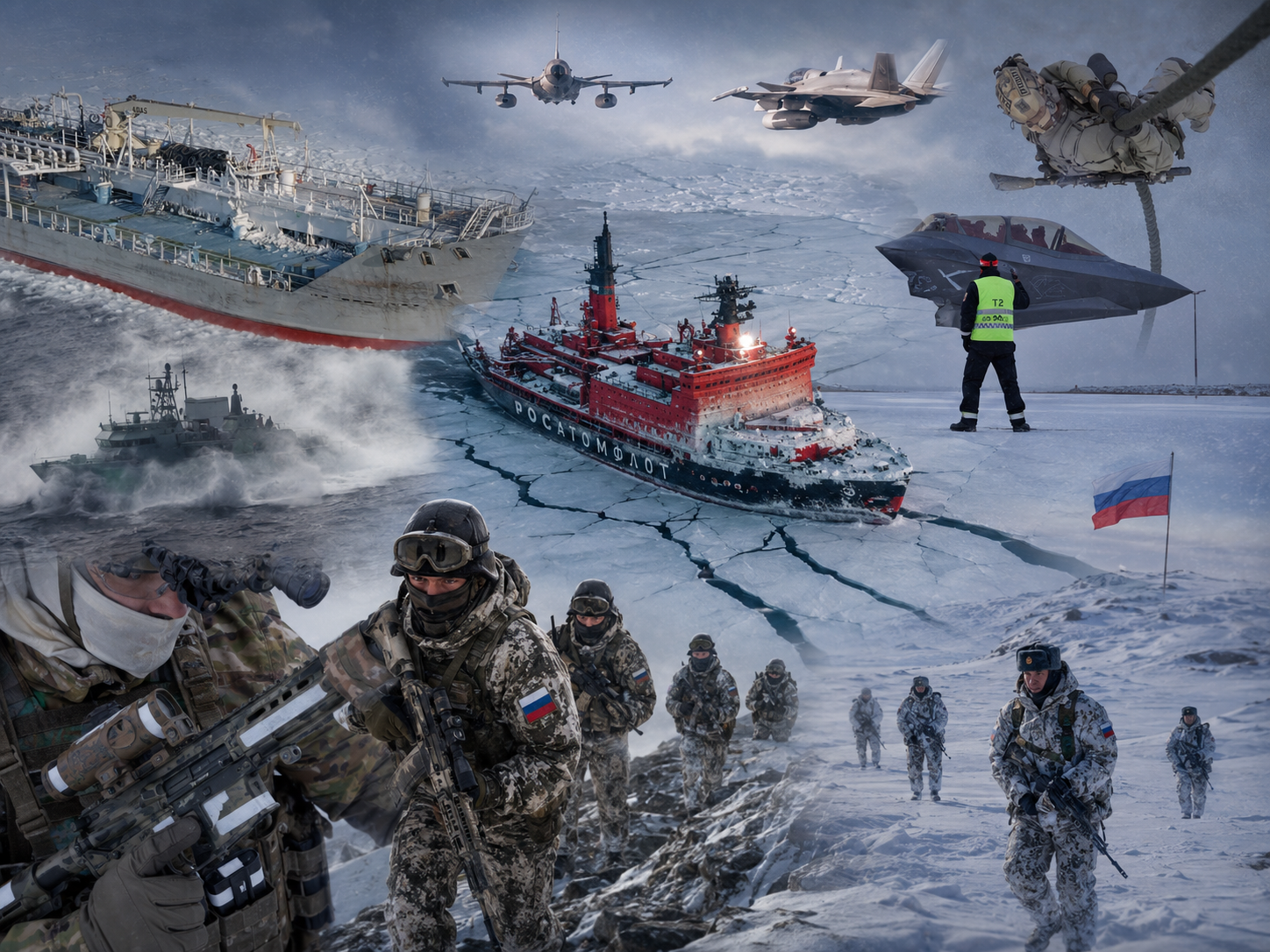
NATO soldiers are drilling in Norway’s frozen north, and icebreakers are being ordered. But Russia’s commanding head start in the High North and Washington’s own wavering commitment raise serious questions about whether the alliance can make good on its promises before it is too late.
The Russian Foreign Ministry called Arctic Sentry “yet another provocation by Western countries.”
In the bitter cold of the Arctic spring, some 30,000 soldiers from 14 allied nations spread across the frozen terrain of northern Norway in March, rehearsing what commanders described as a counter-attack against an invading force from “the east,” a carefully chosen phrase for a carefully chosen audience.
The exercise, called Cold Response, was not just aimed at Russia. It was also, in no small measure, a performance for Donald Trump.
The drills were part of a stepped-up effort called Arctic Sentry that aims to show Washington that Europe and Canada can defend the alliance’s northern flank. The message was unmistakable: NATO’s European members, alarmed by the American president’s threats to annex Greenland and mutterings about abandoning the alliance altogether, are trying to demonstrate that they take the High North seriously.
The problem, defence analysts and current and former NATO officials say, is that demonstrating seriousness and actually closing the capabilities gap with Russia are two very different things.
A Strategic Frontier Long Ignored
Through most of NATO’s eight-decade history, the inhospitable High North was low priority. But melting ice, Russia’s growing strength in a mineral-rich region larger than the United States, and increased interest from China have changed that calculus. What was once treated as a remote buffer zone has become one of the most contested and strategically consequential theatres in great power competition.
Russia has raced far ahead in Arctic defence over the past decade, modernising the world’s largest ice-breaking fleet as climate change creates new routes, and reopening dozens of Soviet-era bases in a region that provides the shortest path to the United States for its nuclear intercontinental missiles. The geography alone makes the region impossible to ignore: the shortest route for a Russian nuclear strike on American soil passes over the Arctic, and the Kola Peninsula, nestled against Norway’s border, houses around two-thirds of Russia’s second-strike nuclear arsenal.
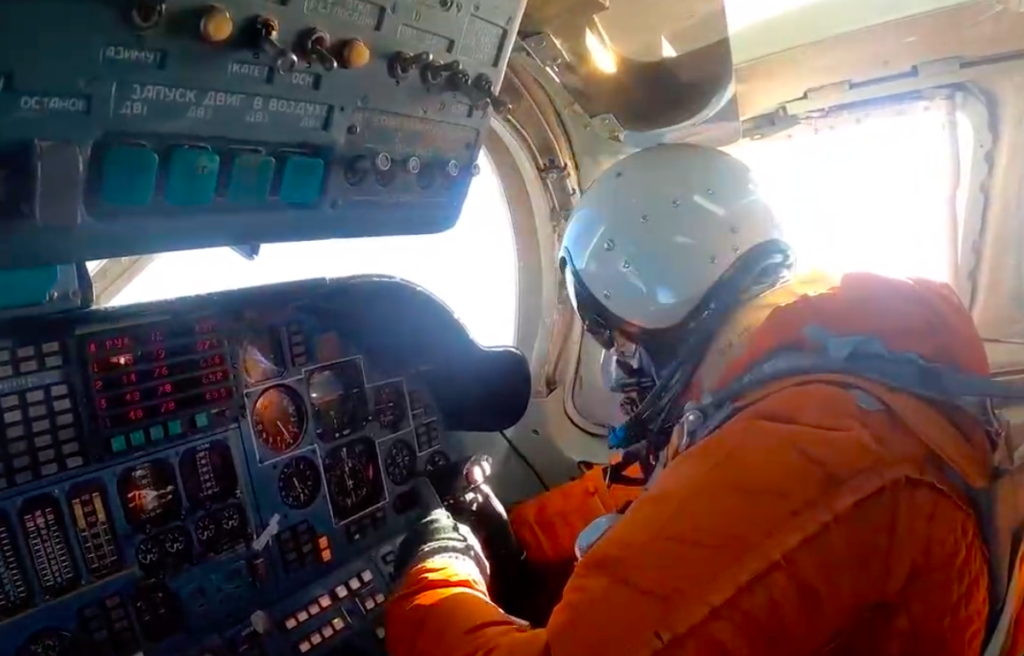
Russian modernisation is underway at a minimum of 19 locations along the Russia-NATO border. The most noticeable changes are on the Kola Peninsula. Credit: Russian Defence Ministry.
The Kola Peninsula accounts for around two-thirds of Russia’s second-strike nuclear capabilities, including the Russian navy’s Northern Fleet, which operates six of Russia’s 12 nuclear-armed submarines. From the peninsula, Russia could launch hypersonic missiles towards the United States, making early warning systems vital, or send submarines towards the US East Coast via the Bear Gap in the Barents Sea and the GIUK Gap between Greenland, Iceland and Britain.
Olafur Ragnar Grimsson, the former Icelandic president who chairs the Arctic Circle forum — sometimes called the “Davos of the Arctic,” put it plainly. No major power in the 21st century, he told Reuters, will be able to maintain its position on the global scene without having a strong presence in the Arctic.
Arctic Sentry: Show of Force or Strategic Substance?
NATO Secretary General Mark Rutte announced Arctic Sentry in February, saying the initiative would, for the first time, bring everything the alliance does in the Arctic together under one command. He said it would help the alliance to “assess which security gaps there are which we have to fill.”
Rutte announced Arctic Sentry as he lobbied Trump to drop his push to acquire Greenland. He was successful with Trump, but significantly strengthening the alliance’s Arctic posture is more challenging, according to interviews with dozens of current and former NATO officials and Arctic experts. It requires long-term investments in a wide range of assets, including icebreakers, submarines, drones and satellites, testing allies’ economic and military resources at a time when Trump has threatened to leave NATO altogether, and Washington is withdrawing troops, planes, ships and weapons from Europe.
Arctic Sentry follows Baltic Sentry, launched in January 2025 to protect critical infrastructure in Baltic waters, and Eastern Sentry, an ongoing deterrence mission along NATO’s eastern borders since September 2025. NATO is now running three simultaneous “Sentry” operations along its entire northern and eastern perimeter.
The commitments that followed the launch were swift, at least on paper. The United Kingdom announced that the number of British troops deployed to Norway would double over three years, from 1,000 to 2,000. France, Germany and Denmark said they would take part in Arctic Sentry, though without specifying troop numbers. In June, NATO activated a new grouping of 600 soldiers based in Sweden and Finland’s Lapland regions. And American commanders made a point of attending Cold Response to send a signal of their own.
“Our commitment is to defend every last inch of NATO territory,” Major General Daniel Shipley, commander of US Marine Corps Forces for Europe and Africa, said in Bardufoss, Arctic Norway. It was a reassuring line — but also one that NATO allies have never previously had to solicit quite so deliberately from their most powerful partner.
The Icebreaker Gap Nobody Can Explain Away
Beneath the show of unity, a structural imbalance has been building for decades and cannot be wished away by a single exercise cycle. Russia has roughly 40 icebreakers by some estimates, far more than any other country, while China fields around five and the two countries plan to work together to expand their combined Arctic fleet.
The United States, by contrast, fields just one heavy polar icebreaker along with a number of smaller vessels.
Russia’s strength is built not only on large numbers but also on advanced technology. At the centre of Russia’s Arctic power is the fleet managed by state operator Rosatomflot, which includes eight active nuclear-powered icebreaker ships designed to break through heavy ice year-round.
The US has responded with plans rather than ships.
The Trump administration announced plans to order four Arctic Security Cutters from Finland and build another seven in American shipyards using Finnish expertise. The Coast Guard assesses that it needs at least nine such ships to serve national security needs year-round in the Arctic.
Canada, Finland and other NATO allies add dozens of icebreakers to the western alliance’s ice-breaking arsenal, bringing it closer to parity with Russia, but Arctic experts believe nearly a third of them are past their design life.
Russia’s fleet is heavier and more specialised, built for heavy-ice operations in ways that many alliance vessels are not.
Vice Admiral Rune Andersen, chief of the Norwegian Joint Headquarters, identified this as one of the central vulnerabilities facing the alliance. Russia and China are the only two countries building icebreakers at scale, Andersen said, and the West has been “falling behind” in its ability to operate fully in the Arctic. He acknowledged that NATO members had recognised the numerical deficit and were taking steps to address it, but the pace of those steps remains a point of serious concern.
Norway Looks Over Its Shoulder — at Washington
For Norway, a country that shares a border with Russia and has spent decades cultivating an intimate intelligence-sharing relationship with the United States, the anxiety is existential and unusually specific. Norwegian officials now emphasise that it is in Washington’s interest to stay engaged in the Arctic, an argument they did not have to make before. Norway joined France’s nuclear deterrence initiative in June, a significant break from its traditional deference to the American umbrella.
According to Reuters, it cannot be established whether the United States is contributing more or less to collective Arctic defence under Arctic Sentry, which is led by Joint Force Command Norfolk, Virginia, established in 2019 with an eye on Russia’s advances in the north.
The Pentagon and White House did not respond to questions about whether US forces involved in Arctic defence would be affected by a US review of troops in Europe.
That review, alongside Trump’s lingering designs on Greenland and his recent announcement of cuts to NATO’s crisis force contributions, including fighter jets, drones and ships, has shaken confidence in Washington’s Arctic commitment even as American generals deliver reassuring lines on Norwegian soil.
Iris Ferguson, who served as US deputy assistant secretary of defence for Arctic and global resilience from 2022 to 2025, captured the dilemma facing the alliance with unusual candour. When you have a hot war burning in the East, she told Reuters, it is hard to direct investment into a region that doesn’t feel as hot. Russia’s war in Ukraine has consumed the attention of European defence ministries, funding cycles and political bandwidth, leaving the Arctic to compete for resources it rarely wins in the short term.
China’s Quiet Arctic Ambitions
While Russia commands the most immediate attention, China’s expanding Arctic footprint is reshaping the strategic horizon for the alliance in ways that go beyond icebreaker counts. NATO’s mission follows Trump’s meeting with Rutte in Davos, where the two agreed the alliance should do more to prevent Russia and China from getting more access to the Arctic region.
China declared itself a “near-Arctic State” in 2018 and has deployed various icebreaker vessels off the coast of Alaska and along the Pacific Ocean. It is developing the world’s first AI-powered extra-large long-range underwater drones, which could be up to 42 metres in size, and its close partnership with Russia through joint military exercises and intelligence sharing deepens the combined threat to alliance infrastructure.
Russia and China’s advancing underwater monitoring capabilities could pose a risk for underwater data and internet cables that transmit information between NATO countries, a threat that existing surveillance systems are not yet built to counter at scale.
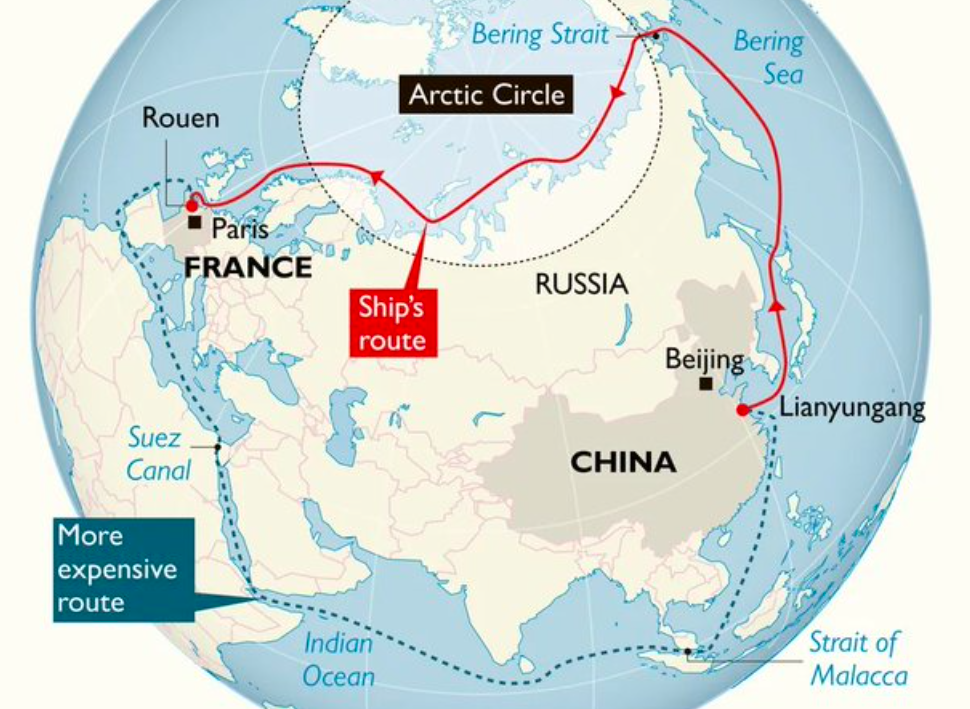
The Arctic route cuts shipping time between China and Europe to just 18 days, significantly slashing transit times compared to the traditional 30-day voyage via the Suez Canal. Credit: X
What Comes After the Exercises
The Ankara summit on July 7 is set to bring these tensions into the open. Along with lingering worries about Trump’s ambitions in Greenland, a US security review of troops in Europe is expected to cast a shadow over the summit. A NATO official said the United States remains a key contributor to Arctic defence and noted the commitment was reaffirmed in a joint statement between Arctic allies in June.
The Russian Foreign Ministry called Arctic Sentry “yet another provocation by Western countries,” and Russian Deputy Foreign Minister Alexander Grushko argued that the peaceful architecture of the Arctic, built up over decades, is being dismantled to demonise Russia. Russia’s embassy in Denmark warned that Moscow’s military-technical response would be proportionate to NATO decisions.
For the alliance, the challenge is not simply proving to Trump that Europe can take ownership of its own northern flank — though that political theatre is real and ongoing. It is proving, before the window closes, that decades of neglect in the High North can be reversed fast enough to matter. The drills in Norway’s frozen forests are one piece of that answer. The icebreakers on order, the submarines not yet built, and the American commitment not yet confirmed in writing are the rest of it.
