In a seismic shift in naval doctrine, the UK scraps plans for the Type 83 warship and pivots to autonomous systems, raising urgent questions about whether the fleet can defend its aircraft carriers, deter Russia, and project power globally.
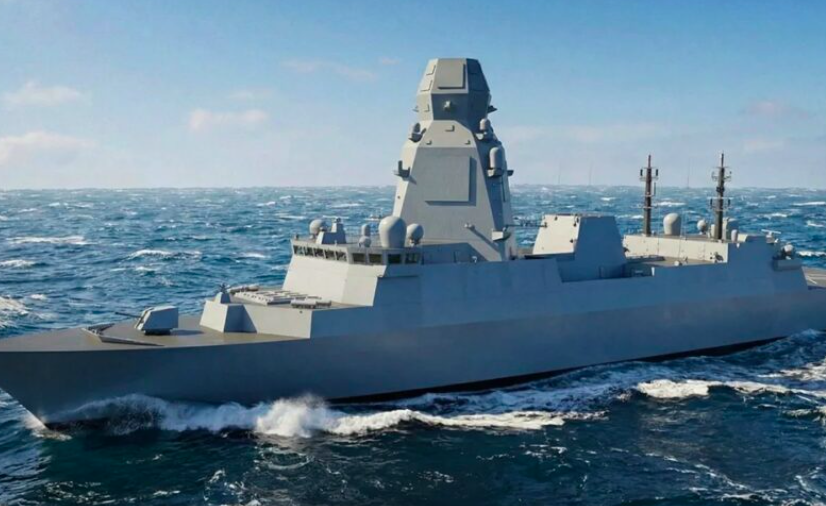
The UK Ministry of Defence announced that Britain will scrap plans to replace its ageing destroyers. Credit: X
Britain has quietly ended the era of the destroyer. In a decision that amounts to the most radical restructuring of the Royal Navy in a generation, the government has killed the long-planned successor to its fleet of ageing warships and placed an audacious wager on drone technology, a bet its critics say has been forced not by strategic vision but by a defence budget that simply ran dry.
The Ministry of Defence announced on Sunday that Britain will scrap plans to replace its ageing destroyers and will instead procure at least six “Common Combat Vessels” to serve as control hubs for uncrewed systems. It is a decision that reshapes not just the composition of the fleet but the very idea of what the Royal Navy is for.
Goodbye, Type 83. Hello, Drone Hub.
The Royal Navy’s six Type 45 destroyers are due to be retired by the end of 2038, and original plans envisioned them being replaced by a next-generation Type 83 class. Under the revised strategy, drone technology and autonomous vehicles will receive funding instead, as ministers seek to modernise Britain’s military capabilities.
The Type 83 was originally planned to come into service in the mid-to-late 2030s and had been described by senior naval officers as an evolution of the Type 45, incorporating laser weapons, electronic propulsion, and more digital systems powered by artificial intelligence and machine learning. The guided-missile warship, first mentioned by the then-Conservative government in 2021, was still in the concept phase of development and no specifics of its design had been publicly confirmed. Around £1 million had been spent on platform-specific design over the past three financial years before the programme was abandoned.
In its place, the Ministry of Defence said at least six Common Combat Vessels will be developed to take the place of the existing Type 45 destroyers, with initial deliveries expected from the early 2030s. Unlike previous generations of warships, the CCVs will be constructed specifically to serve as “control hubs” for uncrewed systems, extending operational reach and firepower without increasing crew size or cost.
Defence Secretary Dan Jarvis framed the pivot as a moment of generational opportunity rather than compromise. “Our Royal Navy is a formidable force, operating to protect our nation and our allies in the Atlantic and beyond,” Jarvis said in a statement. “These Common Combat Vessels will provide our dedicated sailors with hybrid ships that are designed and built for the increasing threats we face. Developed with exceptional British innovators, the new ships will be British-built, supporting jobs across the nation and giving the Royal Navy a capability built for modern warfare.”
A Fleet Built for Swarms, Not Salvoes
The new architecture envisioned by Whitehall is a significant conceptual departure from anything the Royal Navy has operated before. According to the Ministry of Defence, the CCVs will join the Royal Navy alongside eight Type 26 and five Type 31 frigates, as well as a family of uncrewed vessels: the Type 91 missile platform, the Type 92 underwater sensor system, the Type 93 extra-large uncrewed underwater vehicle, and the Type 94 sensor platform.
The core capability of the Common Combat Vessel lies in its role as a command centre. These vessels will not fight alone, they are designed to orchestrate a sophisticated network of autonomous maritime units. By acting as motherships for these technologies, the CCV aims to project force across the North Atlantic and High North, areas identified as critical for countering Russian activity, with the operational goal of protecting underwater infrastructure and enhancing NATO deterrence.
The CCVs will underpin three new programmes, Atlantic Bastion, Atlantic Shield, and Atlantic Strike, aimed at countering Russian military activities in the North Atlantic and High North and strengthening NATO deterrence. It is language that reflects both the ambition and the anxiety behind the decision: the Russian submarine threat in the Atlantic is escalating, undersea cables have been damaged in incidents Western governments attribute to Moscow, and the High North is increasingly treated as a frontline rather than a buffer.
Rather than concentrating capability in a small number of large, expensive ships, the Royal Navy’s shift to a hybrid navy will mix crewed and uncrewed capabilities and, the Ministry of Defence said, be more suited to the pace and nature of modern warfare.
Ministers are also establishing an “uncrewed systems taskforce” at a drone facility in Swindon to accelerate development.
The Carrier Question Nobody Is Answering
For all the confident language from ministers, the decision has exposed a vulnerability at the very heart of Britain’s naval posture that officials have been reluctant to address directly. The Royal Navy has been structured around high-end Type 45 air defence destroyers escorting its aircraft carriers to project global power.
With the Type 45s heading for retirement and no dedicated successor destroyer in the pipeline, the two large carriers could become significantly less capable of operating without appropriate air defence escort, though they too could become platforms for drones.
This was not a theoretical concern. At the start of the Iran war, it took almost two weeks for Britain to get a destroyer deployed to the Mediterranean, a delay that defence analysts at the Royal United Services Institute said brutally exposed the vulnerability of relying on a small number of expensive “exquisite platforms” such as the Type 45.
Defence analysts at RUSI have consistently argued that autonomous systems and “affordable mass” are now essential given the cost and vulnerability of such high-end ships. First Sea Lord General Sir Gwyn Jenkins has championed the move towards smaller crewed ships operating alongside drones, positioning it as a bold leap into modern warfare rather than a retreat from capability.
But the counter-argument is difficult to dismiss. Critics warn that autonomous systems will be no substitute for high-end destroyers, leaving a capability gap at precisely the moment when missile threats are proliferating, and Britain’s carrier strike groups need credible air defence.
Affordability, Not Ambition
The context for these decisions is a defence budget that has been in chronic crisis. The Defence Investment Plan was originally due last year but was held back amid wrangling within government over the amount of money required to finance the military, which prompted former Defence Secretary John Healey to quit in protest alongside former defence minister Al Carns.
Funding for up to eight Type 83 destroyers and five Type 32 frigates is said to have been pulled entirely. The Type 32 frigates were still at the concept stage and had been designed to serve as platforms for deploying mine-hunting and anti-submarine drones. Their cancellation means Britain has in effect shed 13 planned warships from its future fleet in a single document.
The decision to forgo the Type 83 programme is being framed by Whitehall officials as a “pragmatic solution” to an intractable fiscal impasse, with the Ministry of Defence unable to meet its original £28 billion target for the defence programme. One defence expert put it more bluntly, warning publicly that the scrapping of ship replacements was “about affordability, not capability.”
Shadow Defence Secretary James Cartlidge was unsparing in his assessment. The opposition frontbencher argued that the Defence Investment Plan would contain barely any additional funding compared to its predecessor. “So it’s no surprise we are hearing reports of capabilities being scrapped, just at the time we are meant to be strengthening our Armed Forces,” Cartlidge said.
Housing Secretary Steve Reed sought to reframe the government’s position, arguing that the emphasis had to be on future conflict rather than past models of warfare. Speaking to broadcasters on Sunday, Reed said the UK needed to prepare for the potential conflicts of the future rather than “whatever the last war was like.”
Commandos, the Arctic, and a Nod to Russia
While the destroyer programme was cut, the Defence Investment Plan did include one significant injection of funding with a clear strategic rationale. The MoD allocated over £500 million to upgrade the UK’s Commando Force as it transitions to what is being called the “Future Commando Force,” with a renewed focus on operations in the High North. The investment will provide the Commandos with new high-speed Joint Commando Craft, advanced drones, uncrewed vessels, and improved communications and targeting systems, with the programme structured around a partnership with Norway.
The funding will partly go towards new high-speed commando insertion craft, special vessels used to covertly transport special forces, which officials said could be used for operations including the seizure of Russian shadow fleet vessels. It comes after Royal Marine commandos helped intercept the tanker Smyrtos in the Channel in the first UK-led operation to capture a sanctioned ship earlier this month.
The marine investment signals where Britain’s defence planners see the next crisis emerging. With the melting ice caps shifting military attention northward, the emphasis is moving to the High North and the growing Russian submarine threat. The commandos are being reshaped as a specialist raiding force capable of striking quickly from the sea, operating alongside drone swarms.
A Legacy Decision in a Transition Period
The announcement was also charged with political significance, arriving in the final weeks of Sir Keir Starmer’s premiership as he presses ahead with the plan over the objections of his likely successor. The Sunday Times reported that Andy Burnham, the former Greater Manchester mayor who has been authorised to receive government briefings from the Civil Service as he prepares for power, had seen and signed off on the blueprint.
A former chief of the defence staff warned, however, that the plan as published may not be the last word. He said that if there was “not enough” in the Defence Investment Plan, “then it may be that the new prime minister is going to have to find that money as part of the course of this Parliament.”
For the Royal Navy, the reckoning is more immediate. A fleet built over eighty years around the concept of the warship as the supreme expression of national power is being asked to reinvent itself around machines that have never been tested at scale, under a budget that has already proved unequal to the task of maintaining what it already owns. Whether the drone future arrives in time to fill the gap left by the destroyers Britain can no longer afford is the question that will define the next decade of British sea power.