
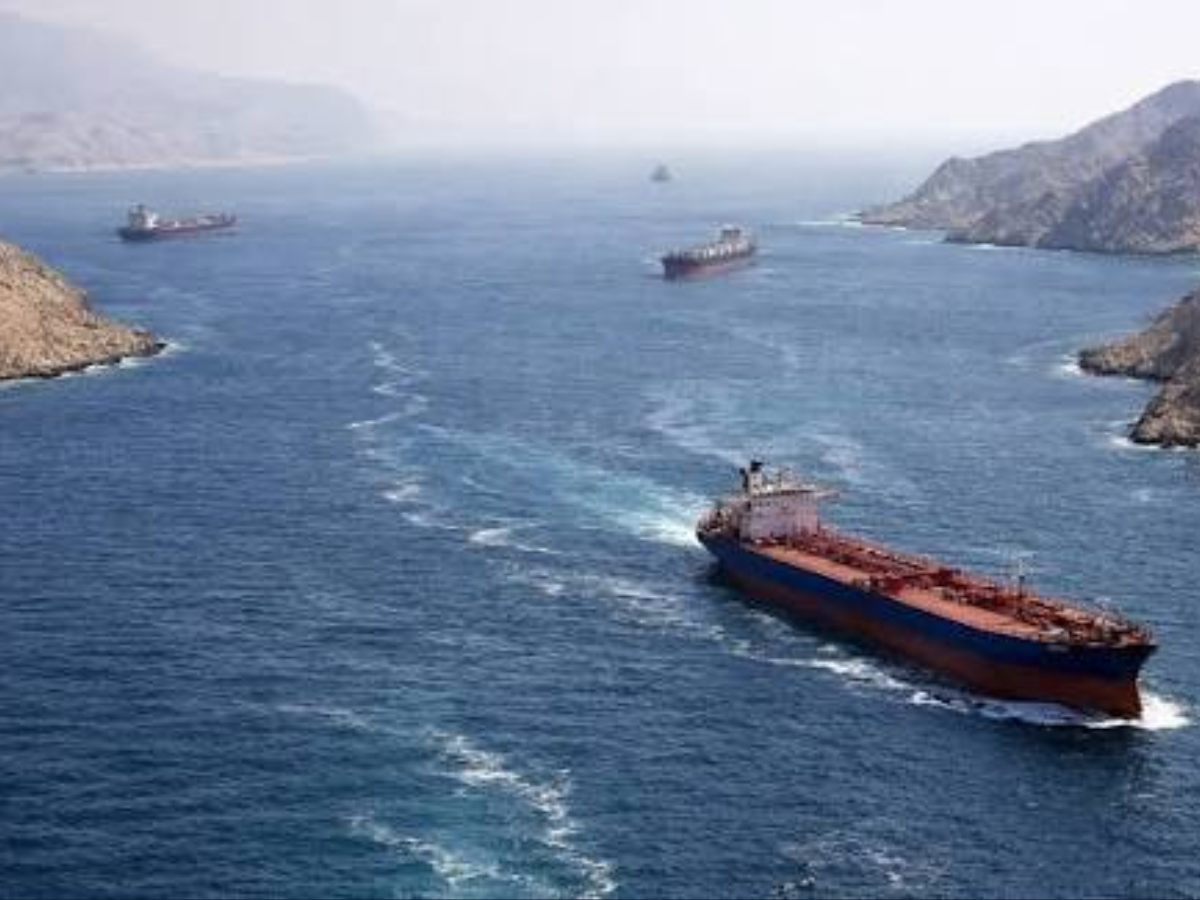
The geopolitical standoff over de-mining the Strait of Hormuz has intensified following competing declarations from Iran and France. The dispute centers on which nations hold the legal authority to clear the waterway and dictate its post-conflict administrative framework.
Iran Will Not Allow Any Other Country to Participate In De-Mining of Strait of Hormuz (Imahe: Social Media)
US-Israel-Iran War Latest News: Iran has officially rejected any foreign involvement in clearing naval mines from the Strait of Hormuz. Iranian Deputy Foreign Minister Kazem Gharibabadi declared that mine-clearing operations will be carried out “exclusively by Iran”. This statement directly responds to a joint initiative proposed by French President Emmanuel Macron and Oman to collaborate with international partners to secure the strategic waterway.
US-Israel-Iran War Latest News: Iran Will Not Involve Any Other Country
The geopolitical standoff over de-mining the Strait of Hormuz has intensified following competing declarations from Iran and France. The dispute centers on which nations hold the legal authority to clear the waterway and dictate its post-conflict administrative framework.
Iran considers de-mining to be its sole responsibility under Article 5 of the Islamabad memorandum of understanding (MoU) signed with the United States to de-escalate recent conflicts. Gharibabadi warned France against “provocations” that could complicate the “sensitive and complex” maritime situation.
France and Oman announced plans to coordinate an international coalition, which could include specialized mine countermeasure forces from the UK, Germany, Italy, and the Netherlands, to ensure “free and unconditional” passage.
While the US-Iran MoU was intended to restore maritime transit, control over the strait remains a major diplomatic sticking point. Iran asserts its authority as a coastal state to regulate navigation, designate safe corridors, and potentially charge transit fees, which the US and Gulf nations reject.
US-Israel-Iran War Latest News: Strait of Hormuz
The Strait of Hormuz handles nearly 20% of global oil shipments, making its control and safe reopening critical to global energy markets. Iran has warned that any unilateral foreign attempts to impose control over the waterway could trigger direct military confrontation.
US-Israel-Iran War Latest News: Legal Dispute
The diplomatic clash boils down to conflicting interpretations of recent treaties and international maritime law:
- The Islamabad MoU (June 18, 2026): Iran’s Deputy Foreign Minister Kazem Gharibabadi stated that under Article 5 of the Islamabad Memorandum of Understanding (MoU), a preliminary agreement signed between Tehran and Washington to de-escalate recent hostilities, demining operations and temporary navigation mechanisms are strictly under Iranian coordination. Iran asserts that no parallel or foreign arrangements are permitted.
- The French-Omani Counter-Initiative: French President Emmanuel Macron announced the de-mining plan following a high-profile summit in Paris with Oman’s Sultan Haitham bin Tarik. France argues that because the Strait is an international gateway, its clearance requires an international coalition to guarantee “free and unconditional passage” for global trade.
- The Freedom of Navigation Argument: The United States and its Western allies reject any interpretation of the MoU that allows Iran to act as a unilateral gatekeeper. They maintain that commercial vessels have an unrestricted right of transit through the chokepoint.
US-Israel-Iran War Latest News: Iran’s New Maritime Strategy
Iran is leveraging its position as a dominant coastal state to fundamentally alter how the Strait of Hormuz operates:
- Redrawing Shipping Lanes: Gharibabadi announced that Iran intends to revise the existing shipping routes in the Strait, which have been governed by a bilateral agreement between Iran and Oman dating back to 1968. Tehran claims these routes must be updated to reflect “today’s regional realities”.
- Mandatory Navigation Corridors: During the current post-conflict transitional period, safe navigation corridors will be designated solely by Iran. Gharibabadi warned that any vessel traveling outside these approved channels will face direct Iranian opposition and bear full responsibility for the consequences.
- Permanent Administrative Shifts: Iranian Parliament Speaker Mohammad Bagher Ghalibaf explicitly noted that the administration of the Strait “will never return to how it was before the war”. Iran is setting up a dedicated coordination center and a direct telephone hotline to manage all incoming maritime traffic.
US-Israel-Iran War Latest News: Current Safety & Economic Risks
Iran’s deployment of naval mines has effectively blocked most commercial vessel movement through the corridor. While the US has previously attempted localized mine-sweeping operations, a comprehensive cleanup has not yet begun due to these diplomatic friction points.
The ongoing closure severely disrupts global supply chains, affecting nearly 20% of global petroleum liquid shipments. Resolving who manages the de-mining is now the single biggest hurdle preventing negotiators from turning the preliminary US-Iran ceasefire into a permanent peace deal.
