
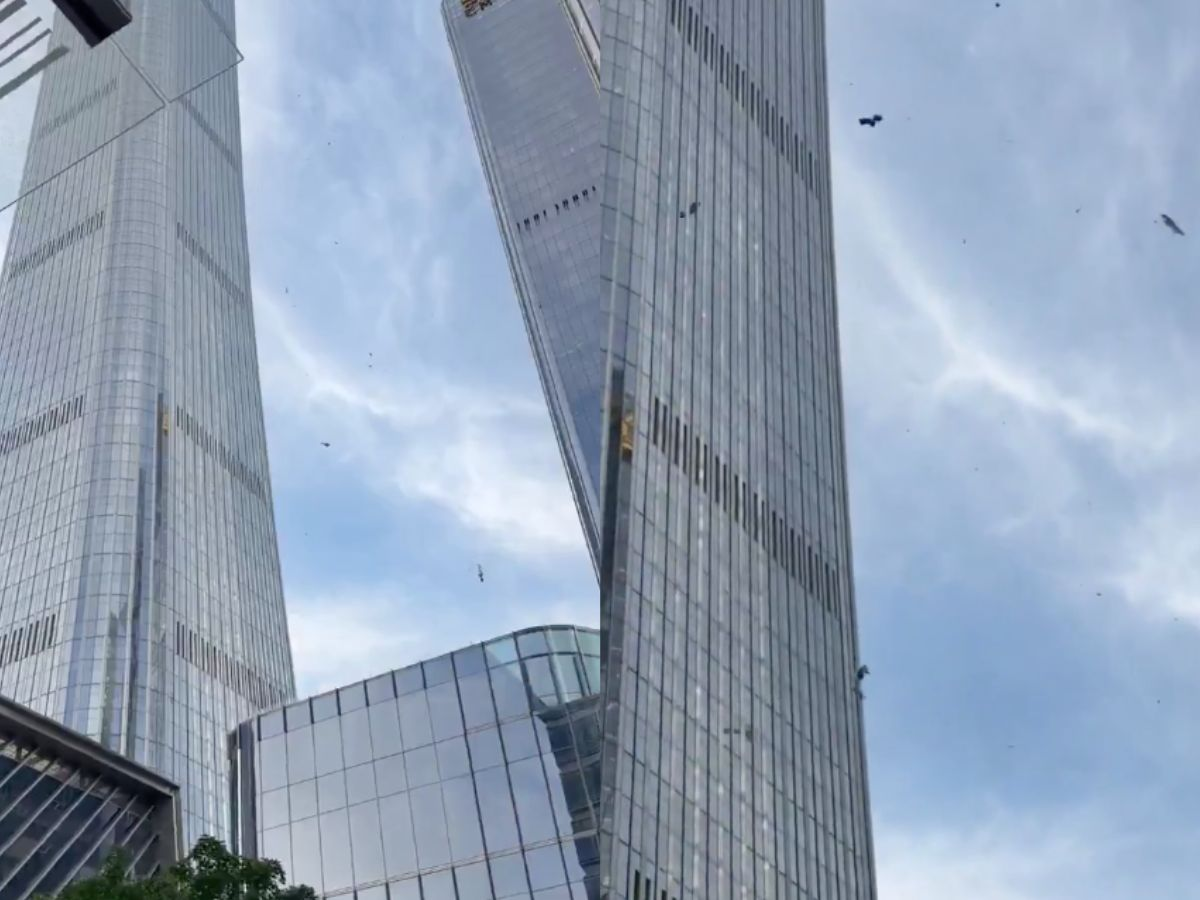
A small two-seater aircraft crashed into Beijing’s tallest skyscraper, the 528-metre CITIC Tower, during Friday evening rush hour on June 26, killing the pilot and injuring 13 people on the ground with falling glass and debris. Chinese authorities initially said nothing publicly, while footage of the incident was rapidly scrubbed from social media; the police prevented bystanders from photographing the scene.
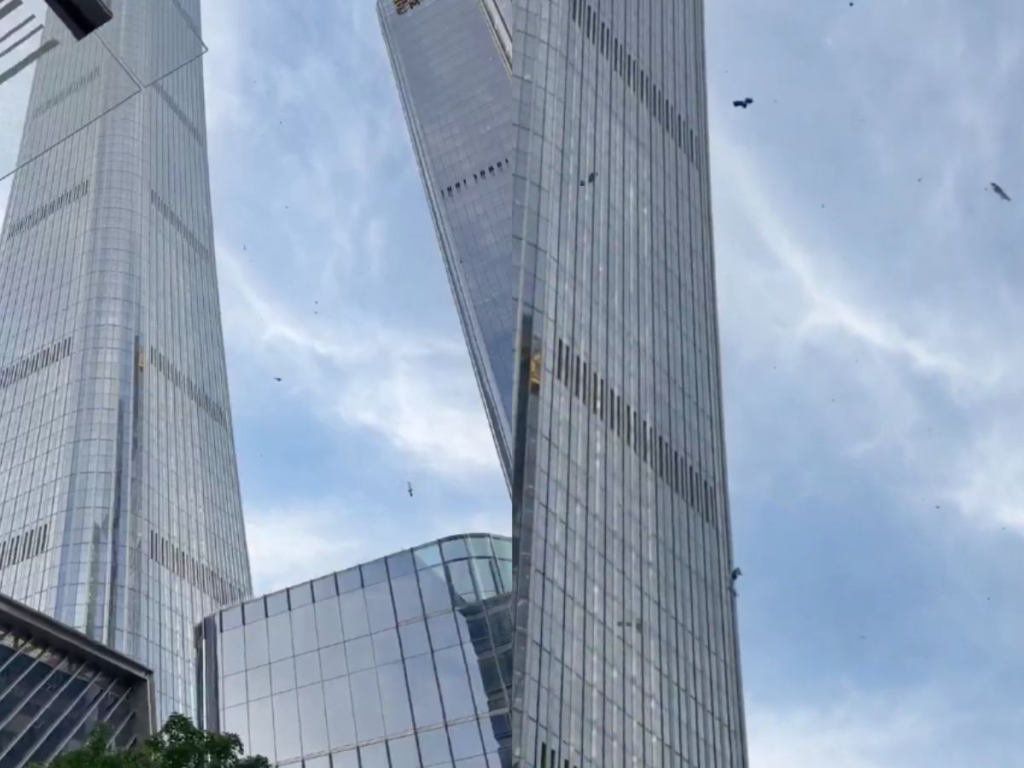
The pilot is dead, 13 people are injured, and the world’s most surveilled city is offering no explanation for how a small aircraft penetrated some of the tightest airspace on earth. Credit: X
At 5:55 on a Friday afternoon, as Beijing’s financial district emptied for the weekend, a small aircraft the size of a car slammed into the upper floors of the city’s tallest skyscraper, sending a shower of glass, debris and aircraft parts plummeting hundreds of feet onto the streets below. Within hours, it was as though it had never happened.
The Crash That Shook Beijing’s Most Protected Skyline
On Friday afternoon, a small plane appeared to evade some of the world’s strictest aviation controls and slam into the tallest skyscraper in Beijing, the 109-story CITIC Tower that dominates the city’s skyline, killing the pilot and injuring 13 other people.
The crash sent shards of glass and aircraft debris plummeting hundreds of feet down to the streets below as office workers left for the weekend, causing panic in the heart of China’s most protected city.
Videos taken by people near the CITIC Tower appeared to show the plane striking a high floor before it spun downward and crashed to the ground in front of the tower’s entrance. Dramatic footage showed debris falling from the building, as well as a tail section of the plane and a broken window of a taxicab on the ground. A CNN journalist witnessed people evacuated from the skyscraper gathering on the streets near the entrance, along with firetrucks, police cars and an ambulance.
A courier standing among people who had gathered near the building said he had rushed over to CITIC Tower around 6 p.m. local time from a nearby location after hearing a loud crash as an aircraft about the size of a car hit the building.
Then the Silence Began
A short while later, it was like nothing had happened. All references to the incident, and the shocking footage of it, had been scrubbed from Chinese social media. The government initially did not publicly acknowledge any incident had taken place. State media, including the country’s national broadcaster CCTV, headquartered across the road from the crash site, made no mention of the incident.
Police prevented some people from taking pictures and asked others to delete those they had taken while ushering people away from the building. The statement issued on Saturday received virtually no coverage on Chinese media outlets.
It was only the following day that a terse acknowledgement appeared. Chaoyang district government said in a statement on Saturday: “A single-engine, two-seat light sport aircraft collided with a high-rise building while flying near the East Third Ring Road in Chaoyang, at 5:55 p.m. on June 26.” Those injured are receiving medical treatment and authorities are investigating the incident, the statement said.
How Did It Get Through?
The building the plane struck is not simply Beijing’s tallest skyscraper. The CITIC Tower is 528 metres tall and has been Beijing’s tallest building since 2018. It hosts China’s state-owned conglomerate CITIC Group and tech giant Alibaba, and the surrounding neighbourhood is frequented by foreigners and diplomats. The embassies of countries ranging from the UK to Vietnam are just steps away, as are the World Bank and IFC’s China offices. The tower is also near Zhongnanhai, the compound that houses the offices of China’s top political leadership.
That location makes the security implications deeply uncomfortable for Chinese authorities. Flying any light aircraft in Beijing requires approval from both the Civil Aviation Administration of China and the People’s Liberation Army Air Force.
A former pilot told the Financial Times that any aircraft entering the airspace within Beijing’s Second Ring Road would immediately trigger an alert, potentially involving the Air Force. The CITIC Tower is located just beyond the Third Ring Road, so the fact that a small propeller plane managed to reach it, apparently undetected or un-intercepted, raises a series of questions.
Unverified flight data from Flightradar24 posted online appeared to show a severely deviated flight path for the aircraft after it took off from Beijing’s Shifosi airport. A flight without the required authorisations would be classified as a hei fei, literally a “black flight,” meaning it was illegal.
One resident who spoke to CNN near the scene, Anna, said: “I heard a lot of policy and rules and laws about ‘Don’t use any aircraft in Beijing.’”
The Aircraft, and a Name That Won’t Go Away
The aircraft involved was identified as a Sunward Aurora SA60L, a Chinese-made two-seater light aircraft with a cruising speed of between 170 and 220 kilometres per hour and a maximum takeoff weight of approximately 340 kilograms, owned by a local general aviation company.
The pilot’s identity has not been officially confirmed, but online speculation has fastened on one name. A woman named Liu Junhua held a senior position at a subsidiary of China CITIC Bank, the banking arm of the same group after which the skyscraper struck by the plane is named.
According to documents published on the CITIC Wealth Management website and cited by several Chinese-language sources, a woman named Liu Junhua was still listed as one of the five directors of the company’s investment department on June 22, four days before the accident. Documents dating back to 2023 also listed her as head of the investment management line.
The identities of the pilot and the banking executive may be the same, but it is also true that Liu Junhua is an extremely common name in China. On Saturday afternoon, apparently in an attempt to stem speculation, CITIC Wealth Management issued a statement containing some remarks attributed to Liu Junhua on economic and financial matters.
A Cover-Up Pattern China Has Used Before
While the cause of Friday’s crash remains unclear, the apparent censorship of images and information could suggest an attempt to downplay any possible security lapse. Deadly and highly public incidents in China are sometimes followed by official information vacuums that can last for years.
On Saturday, roads near the CITIC Tower were closed, and police were present around the site. Only people who could prove they worked in the area were allowed to enter. Delivery drivers were stuck outside and waiting for employees to come out to collect their orders, according to a CNN journalist.
For the 13 people injured by falling glass and debris on a Friday evening pavement, and for a watching world still piecing together footage rescued before the censors arrived, the Chinese government’s silence has answered one question while raising a dozen more, chief among them how, in one of the most surveilled cities on the planet, a small plane flew undetected to the heart of it all.
