
New data on staggering front-line survival times, a 30% recruitment collapse, and eight Russian deaths for every Ukrainian casualty reveal a military grinding through its own soldiers at a rate that is becoming impossible to hide.
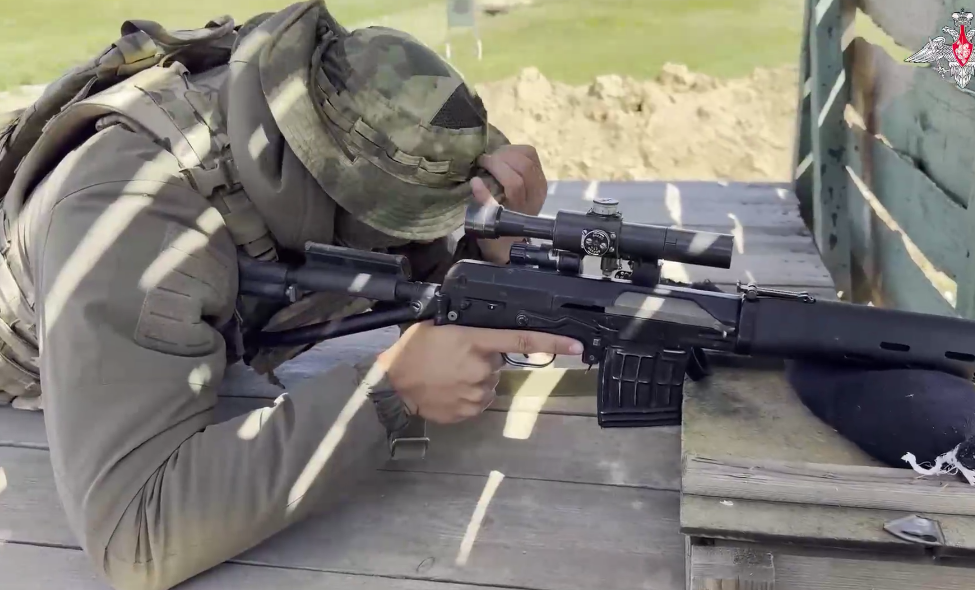
Drones now account for more than 80% of Russian losses. Credit: Russian Defence Ministry
The contract is usually a few pages long. The signing bonus can reach $80,000, a fortune in the Russian regions where most recruits are drawn from. The training lasts a few days. And then, according to Russian military bloggers whose accounts have spread across Telegram channels and are now being cited by Western historians, the new soldier reaches the front line of eastern Ukraine and has, on average, twenty minutes to live.
Once Russian soldiers reach certain parts of the front lines of the war in Ukraine, they can expect to live an average of just 20 to 35 minutes, according to a grim estimate by Russian military bloggers, cited by Oxford historian Peter Frankopan in a Foreign Policy report. The figure, precise and harrowing, has taken on a life of its own, spreading through Russian military communities and filtering upward into academic analysis, precisely because it rings true to so many families who have already lost someone.
20 Minutes From Arrival to Death
Citing statements from Russian military bloggers, Frankopan noted that after signing a military service contract, a Russian soldier can expect to live for only 10 days to three weeks total, from the moment they arrive at a training ground to their death in battle. The average lifespan of these Russian recruits during active combat operations in Ukraine has dropped to a staggering 20 to 35 minutes.
Many of those who sign up undergo accelerated training lasting only a few days before being sent directly to the front line. The result is men arriving at one of the most drone-saturated battlefields in history with barely enough time to orient themselves before the machines find them.
Drones now account for more than 80% of Russian losses, according to Ukrainian President Volodymyr Zelensky. The battlefield has been so transformed by cheap, first-person-view drones that traditional infantry movement, the kind that has defined land warfare for a century, has become nearly suicidal.
Unable to rely on heavy artillery, now easily picked off by drones, Russia’s military has turned to infiltration tactics: using small groups of soldiers on foot or motorcycles to probe weaknesses in Ukraine’s lines. Those men, moving exposed through open terrain, are precisely the kind of targets the drones were built to find.
A Military Haemorrhaging at 30,000 a Month
The numbers behind the 20-minute figure are staggering in aggregate. Russia’s monthly casualties now exceed 30,000 personnel, with the Russian army suffering eight casualties for every single casualty sustained by Ukraine.
Ukrainian Armed Forces Commander-in-Chief Oleksandr Syrskyi stated that since the beginning of 2026, total Russian military casualties had exceeded 141,500 troops, with over 83,000 classified as irreversible losses.
According to Syrskyi, the Russian army loses at least 1,000 service members daily to deaths or injuries. Ukrainian President Volodymyr Zelensky noted that Russian casualties for April alone exceeded 35,000 killed and severely wounded.
Ukraine’s defence ministry said total enemy losses from February 24, 2022, through late June 2026 have reached an estimated 1.4 million personnel.
The British intelligence agency GCHQ said last month that Russian war deaths have now likely reached nearly 500,000, according to CBS News. Estimates suggest that there are now more Russians killed in the war than there are wounded, a first in modern warfare.
Recruitment Collapsing as the Word Gets Out
It is against this backdrop that Russia’s recruitment machine is beginning to seize. Recruitment of new contract soldiers into the Russian army has dropped by 30% in 2026. The Kremlin has responded by dramatically escalating the financial inducements on offer. Signing bonuses can reach $80,000, and debt write-offs up to $140,000- enormous sums in a country where the average salary is about $1,000 per month, and significantly lower in many remote regions.
Despite this, around 800 to 1,000 volunteers join the army every day. But the gap between the men being recruited and the men being consumed by the front is widening. At the end of 2025, Russian authorities reported more than 420,000 signed contracts, even as state media acknowledged the sharp decline in new sign-ups this year.
Is the Drone Economy Winning the Arithmetic?
While Russia feeds men into the kill zone, Ukraine has been methodically restructuring its military around the principle of replacing soldiers with machines wherever possible. “We say there is no need to send a human being where the robot can do the job,” Oleksandr Kamyshin, the official in charge of Ukraine’s defence industry, told CBS News.
Ukraine’s military has managed to more effectively reduce its soldiers’ exposure to danger by using drones to replace some troops in combat, medical evacuation and logistics roles. Military analyst Rob Lee, based in Ukraine, told CBS News that manpower has been “a problem since the end of the summer of 2023 offensive,” noting cases where infantry had spent more than a year in position without rotation. Yet the asymmetry in casualties suggests Ukraine’s drone-first approach is extracting a disproportionate toll on the other side.
According to Reuters estimates, drone attacks have reduced Russia’s oil refining capacity by about 700,000 barrels per day, with more than half of Russia’s regions now facing fuel supply restrictions.
The economic attrition mirrors the human one: war spending now exceeds half of Russia’s state budget, with experts warning of growing risks to the country’s economic stability.
The Cracks Are Showing Inside
Perhaps the most telling sign of the war’s toll on Russia is not the battlefield data but the domestic one. In a Russian nationwide public opinion survey released by the Institute for Conflict Studies and Analysis of Russia, a Ukrainian think tank, 31% of respondents said one or more of their family members have been mobilised, a 14% increase from 2022.
Oleksandr Shulga, the head of the think tank said, “Most Russians know someone killed in action since the beginning of the war: only 29% said that no one among their relatives or acquaintances has died in the fighting.”
Internal fractures are also surfacing within the military itself. Russian milblogger and veteran Alexander Lunin accused commanders of torturing their own soldiers, warning that if Russian President Vladimir Putin does not agree to a direct conversation, “the army will turn its weapons against the Kremlin.”
Frankopan, for his part, does not believe revolution is imminent. But his warning about the months ahead has the quality of a sentence that cannot easily be unread. As he wrote in Foreign Policy: “Beware the drowning man: The coming months will likely be dangerous outside and inside Russia as Putin tries desperately to stay afloat.”
