
The US Supreme Court has delivered a landmark 5-4 ruling rejecting a major Republican challenge and confirming that states have the authority to count mail-in ballots that arrive after Election Day. The cross-ideological majority ruled that federal statutes govern only the deadline by which citizens must cast their votes, not when local election offices must physically receive them.
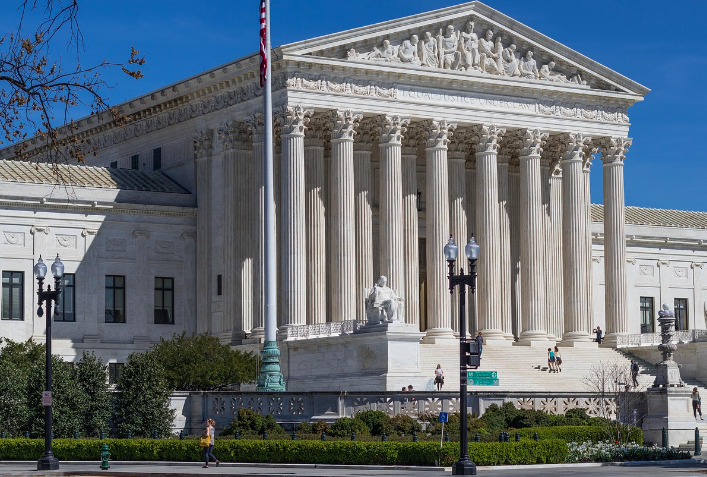
In a highly anticipated 5-4 decision, the high court rejected a concerted legal challenge that sought to eliminate the post-election grace periods. Credit: Pixabay
The US Supreme Court has handed a major defeat to the Republican National Committee and US President Donald Trump by ruling that states have the constitutional authority to count valid mail-in ballots that arrive after Election Day.
In a highly anticipated 5-4 decision, the high court rejected a concerted legal challenge that sought to eliminate the post-election grace periods currently utilised by more than a dozen states and territories.
The landmark ruling ensures that millions of voters will not be disenfranchised due to postal delays, providing sudden regulatory stability for local election officials just months before the highly contested 2026 midterm congressional elections.
The high-stakes legal battle culminated in the case Watson v. Republican National Committee, which centred on a challenge to a Mississippi law that allows mail-in ballots to be processed and counted up to five business days after the polls close, provided they are postmarked by Election Day.
Lawyers representing the national Republican apparatus argued that nineteenth-century federal statutes establishing a uniform federal Election Day meant all physical ballots must be received by the close of polling.
However, a cross-ideological majority on the Supreme Court directly rebuffed this theory, establishing that federal law dictates only the uniform day on which citizens must cast their votes, leaving the logistical timeline of receiving and counting those ballots entirely to the discretion of individual state legislatures.
State Sovereignty in Running Elections Upheld
Justice Amy Coney Barrett authored the majority opinion for the court and was joined by Chief Justice John Roberts as well as the three liberal justices, Elena Kagan, Sonia Sotomayor, and Ketanji Brown Jackson.
In the ruling, the majority emphasised that the text of federal voting laws does not mandate an absolute deadline for when local authorities must physically hold a ballot in their hands. Justice Barrett explained that the act of voting and the act of processing the vote are separate procedures under the US Constitution, which explicitly delegates the time, place, and manner of holding federal elections to the states unless Congress intervenes.
“The Constitution thus envisions a system in which receipt of votes is necessarily divorced from voting,” Justice Amy Coney Barrett wrote in the majority opinion.
“And it sets the crucial, uniform day as the day of voting while leaving receipt to happen later. The federal Election Day statutes require the electorate’s choice to be made on Election Day.
That occurs so long as Election Day is the deadline for individuals to vote, as it is in Mississippi.
But the election-day statutes do not set a deadline for ballot receipt, so they do not prevent Mississippi from counting ballots postmarked before Election Day yet received afterwards.”
Dissenting Warnings of Electoral Chaos
The high court was sharply divided, with four conservative justices issuing a stinging dissent that accused the majority of upending centuries of settled American political understanding.
Justice Samuel Alito, who authored the primary dissenting opinion alongside Justices Clarence Thomas, Neil Gorsuch, and Brett Kavanaugh, argued that allowing votes to filter into tabulating centres days after the formal conclusion of polling risks damaging public trust.
The minority bloc claimed that an election must be viewed as a single, discrete event that concludes definitively when the calendar turns.
“For state legislatures trying to understand what the Election Day statutes allow, the majority’s decision opens Pandora’s box,” Justice Samuel Alito declared in the dissenting opinion.
“Not only is today’s decision inconsistent with statutory text, legal context, historical practice, and precedent; it also threatens to produce lamentable consequences. The majority’s holding spawns a slurry of troubling election-law questions and risks further undermining Americans’ confidence in election integrity.”
Broad Institutional Reaction and the Path to the Midterms
Civil rights organisations and voting advocacy groups celebrated the high court’s decision as a profound win for democratic accessibility, particularly for rural residents, older citizens, and voters with physical disabilities who rely heavily on remote voting options.
Voting experts noted that the ruling protects existing grace periods in fourteen states, the District of Columbia, and multiple US territories, whilst preserving specialised military and overseas ballot laws across the remainder of the country.
Leaders within the civil rights sphere emphasised that the holding properly shields ordinary citizens from systemic administrative variables that are entirely beyond their personal control.
“A ballot mailed on time is a vote cast on time, and the court just affirmed what’s been true for over a century,” Sophia Lin Lakin, director of the ACLU’s Voting Rights Project, stated in an official release responding to the decision.
“These voters did everything right; they followed the rules and got their ballots in the mail. They shouldn’t lose their voice because a postal truck ran late, and now they won’t. This is how it’s supposed to work: states decide how to count their voters’ ballots, and that authority is intact heading into November.”
Conversely, the Republican leadership expressed deep disappointment with the legal outcome and vowed to pivot their strategy toward legislative remedies on Capitol Hill rather than relying entirely on judicial interventions. RNC Chairman Joe Gruters criticised the ruling, warning that prolonged counting periods create unnecessary friction and delay the finality of American democratic outcomes.
“Democrats are inviting chaos at the ballot box by allowing elections to drag on for days and weeks after voters cast their ballots,” RNC Chairman Joe Gruters said in an official statement.
“Republicans are not going to be deterred by this decision, and the RNC will keep fighting to have elections end on Election Day as Americans want.”
US President Trump, who has consistently targeted mail-in voting mechanisms throughout his tenure, sharply condemned the judicial decision, utilising his social media network to demand immediate legislative action from conservative lawmakers.
The executive pushback comes as the administration intensifies its public pressure on Congress to pass the SAVE America Act, a legislative package designed to severely curtail mail-in balloting options and introduce strict documentary proof-of-citizenship mandates nationwide.
“If we want fair and secure elections, Election Day should mean exactly what it says, which is why this decision makes it even more imperative that Congress pass the SAVE America Act,” US President Trump stated in a public address following the ruling.
