
Serbian President Aleksandar Vucic announced Saturday he would resign within weeks and trigger simultaneous early presidential and parliamentary elections, but thousands of protesters flooded the city of Kraljevo the following day, openly dismissing the pledge as a tactical manoeuvre by a man who has dominated Serbian politics for 12 years.
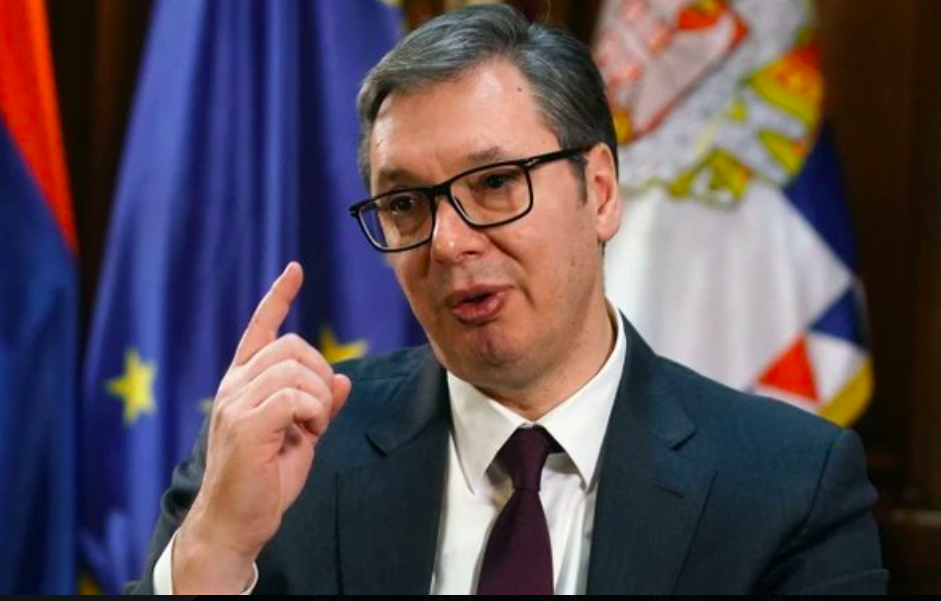
Serbian President Vučić says he will resign in the coming weeks. Credit: X
Serbian President Aleksandar Vucic announced on Saturday that he would resign within weeks and call early elections, and by Sunday, thousands of protesters were back in the streets, loudly and defiantly unconvinced.
Thousands of demonstrators descended on the Serbian city of Kraljevo on Sunday, keeping up pressure on Vucic a day after he said he would step down within weeks to pave the way for early presidential and parliamentary elections. Far from treating the announcement as a victory, the crowds treated it as confirmation that the fight was far from over.
Under Serbian law, Vucic cannot seek another presidential term in any case, and many protesters and analysts expect him to switch to the more powerful office of prime minister and hand the presidency to a loyal ally, keeping his grip on power entirely intact.
‘By Resigning, He Is Trying to Preempt His Inevitable Fall’
The student movement that has driven the largest sustained protest campaign in Serbia since the fall of Slobodan Milosevic a quarter century ago was unimpressed. Savo Manojlovic, head of the student opposition Move-Change movement, said: “By resigning and with early presidential and parliamentary elections, Vucic is trying to preempt his inevitable fall, because of protests and because of the student movement, which has more support than he does.”
Jelena Danicic, a Serbian-language professor who attended the Kraljevo rally, captured the mood of the crowd: “This is not just a political struggle but a fight between good and evil.”
On Saturday, Vucic had struck anything but a defeated tone. Speaking at a pro-government rally in Belgrade, he told supporters: “I will be president for only a couple of weeks, and then I will resign,” adding: “We will win more convincingly than ever before” — framing his announcement not as capitulation but as a launchpad for electoral dominance.
Eighteen Months of Rage: How a Collapsed Roof Brought Down a President
The demonstrations were ignited in November 2024 when a concrete canopy collapsed at the Novi Sad railway station, killing 16 people. Protesters, opposition groups and rights organisations blamed the disaster on corruption-fuelled negligence in state infrastructure projects — a charge Vucic and his allies denied.
The protests eventually led to the resignation of then-Prime Minister Milos Vucevic in January 2025. Hundreds of people were detained, and Serbia’s police were accused of excessive force and arbitrary arrests by the European Union. What began as grief over 16 deaths had become, over 18 months, the most powerful challenge to authoritarian governance in the Western Balkans in a generation.
The Prime Minister Gambit: Europe Watching, Moscow Too
Vucic did not set a date for his resignation or for dissolving parliament, meaning the timeline for elections, which must fall within 90 days of the resignation, remains unclear. The EU welcomed the announcement cautiously, urging that conditions for free and fair elections be established before any vote.
Analysts expect Brussels and Moscow to be watching closely as events play out in the coming weeks. Serbia, which sits on the EU’s eastern doorstep, is a candidate to join the bloc, but Belgrade still has strong ties with Russia and China, and Vucic has long walked a fine line between them.
For the students in Kraljevo on Sunday, none of that geopolitical calculus mattered. What mattered was simpler and more immediate: a man who had run their country for 12 years, called them foreign agents, and presided over 16 deaths in a crumbling railway station, had promised to leave. They had heard his promises before.
They kept marching anyway.



Leave a Reply