
A heartbreaking tragedy in Brazil has drawn widespread attention after a 21-year-old woman d*ed during a rope-jumping activity at an abandoned bridge in Limeira, São Paulo state.
The victim was identified in reports as Maria Eduarda Rodrigues de Freitas, who d*ed on June 13, 2026, after falling from the Ponte do Esqueleto, commonly known as the “Skeleton Bridge.” Brazilian police said she was not attached to the safety equipment intended to stop her fall before she was launched from the bridge.
What was supposed to be a recreational thrill quickly became a fatal incident that has now sparked serious discussion about adventure tourism, safety checks, operator responsibility, and the dangers of treating high-risk activities as routine.
A Planned Jump Turns Fatal
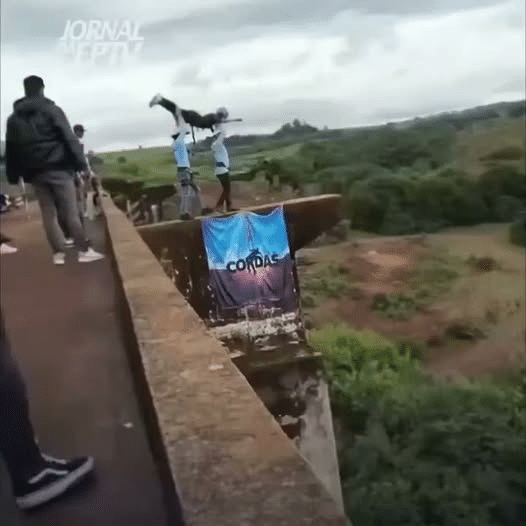
According to investigators, Maria Eduarda was taking part in a rope-jumping session at the Skeleton Bridge, an abandoned structure in Limeira, located about 92 miles north of São Paulo. The bridge has reportedly been used by thrill-seekers for extreme jumping activities.
Police investigator Andrea Levy told journalists that the three instructors involved acknowledged the victim had not been connected to the safety ropes at the time of the jump. Levy said the instructors did not recall who was responsible for attaching the rope or checking the equipment, but emphasized that the ropes were not attached.
The fall was approximately 40 meters, or about 130 feet. Emergency responders were called, but Maria Eduarda did not survive.
Rope Jumping Is Not the Same as Bungee Jumping
Many online posts have described the incident as a bungee-jumping accident. However, reports note that authorities and several media outlets have identified the activity as rope jumping, which differs from traditional bungee jumping. differs from traditional bungee jumping.
Bungee jumping usually uses elastic cords that create a vertical bouncing motion. Rope jumping uses low-stretch climbing ropes that cle motion after the fall.
That distinction matters because both activities require professional oversight, correct equipment, and multiple safety checks. In either case, a participant’s life depends on proper connection to the system before leaving the platform.
Video Circulates Online, But the Investigation Matters Most
Footage of the incident has circulated widely online, drawing shock and anger from viewers. Reports say the video appears to show instructors launching Maria Eduarda from the bridge while people nearby reathough only three instructors remained in custody.
Reports say three instructors were arrested after the fatal incident. CNA, citing AFP, reported that they were arrested for “homicide with dolus eventualis,” a legal term referring to a situation in which authson accepted the risk of a fatal outcome.
AP reported that the instructors could face manslaughter charges and that invesrking to establish exactly what happened.
At this stage, the case remains under investigation, and responsibility will ultimately depend on the evidence gathered by authorities and any court proceedings that follow.
Questions About Authorization and Oversight
One of the most concerning details in the case involves whether the group had permission to operate at the site.
According to PEOPLE, investigator Andrea Levy said the operation was not regulated and tion to be there, citing local reporting.
That detail has intensified public concern. Adventure activities involving heights depend not only on equipment, but also on licensing, training, supervision, emergency planning, and strict procedures. When those systems are weak or absent, the risk increases dramatically.
Why Safety Checks Are Essential
Activities like rope jumping are built around trust.
Participants trust instructors to inspect the gear.
They trust the team to follow checklists.
They trust that no one will launch them before every connection is verified.
A single missed step can have irreversible consequences.
Safety professionals often describe high-risk procedures as needing multiple layers of protection. One person may attach the equipment. Another may inspect it. A third may confirm verbally before the participant is cleared to jump. These layers exist because human error is possible, and no life should depend on one rushed or distracted moment.
This tragedy is a painful reminder that safety procedures are not optional details. They are the core of the activity.
A Young Life Lost
Maria Eduarda was only 21 years old. PEOPLE reported that she had hoped to become a physical education teacher and had requested an “airplane style” launch, where articipant while their arms are extended.
Shortly before the incident, reports say she posted an image from the site ut jumping from a bridge. citeturn539406view1turn539406view3
That detail has made the tragedy feel even more heartbreaking for many people following the case. What began as a moment of excitement became a devastating loss for her family, friends, and community.
A Broader Warning for Adventure Tourism
Adventure tourism can be exciting, memorable, and safe when run by trained professionals under strict standards. But this case shows why participants should be cautious before taking part in any extreme activity.
Before booking, people should ask whether the operator is licensed, whether staff are trained, whether equipment is inspected, and whether there is a clear safety briefing. Participants should also feel empowered to ask for a visible final check before any jump, climb, ride, or descent.
A reputable operator should never be offended by safety questions.
They should welcome them.
Final Thoughts
The d*ath of Maria Eduarda Rodrigues de Freitas has become more than a viral video or shocking headline.
It is now a serious investigation into safety, accountability, and how a young woman could reportedly be launched from a bridge without the equipment meant to protect her.
Authorities continue working to determine exactly who was responsible and whether criminal liability applies. What is already clear is that high-risk activities require complete attention to procedure every single time.
No thrill should ever come before safety.
No participant should ever be placed in danger because of a missed check.
And no family should have to lose someone in a tragedy that proper precautions may have prevented.
