
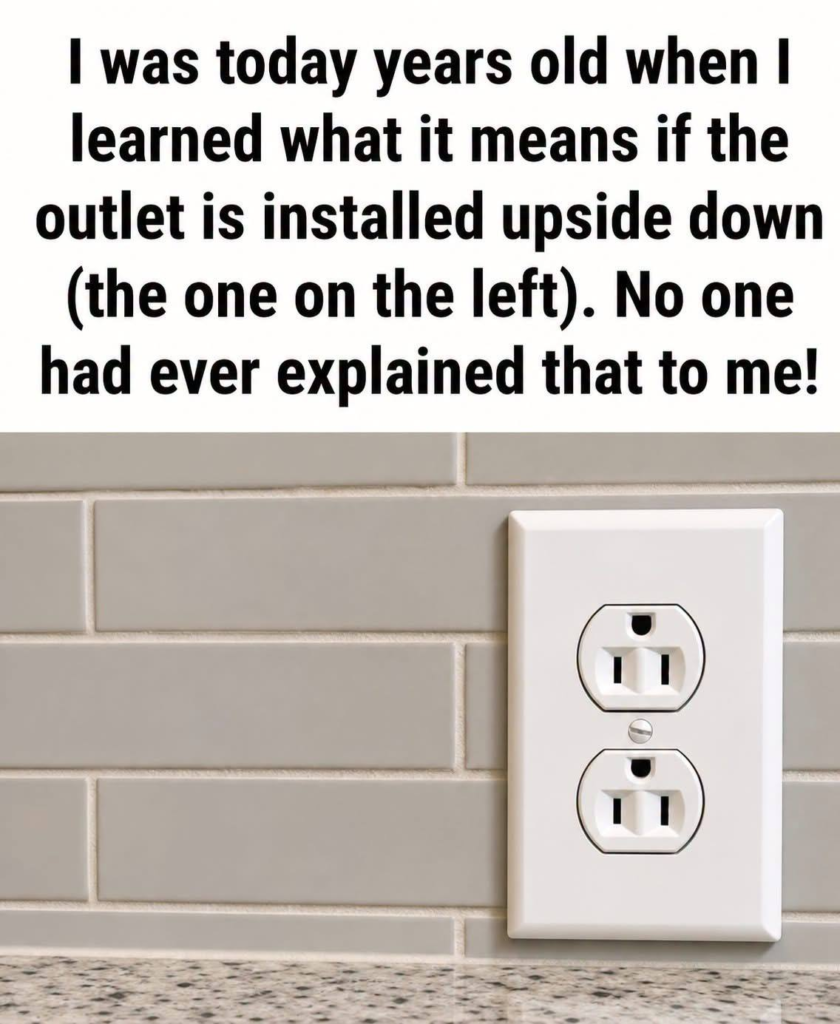
That odd, upside-down outlet in your living room isn’t a mistake. It’s a clue. A quiet, easily missed signal about how your home was wired—and why some “dead” outlets aren’t dead at all. In countless homes, flipped receptacles hide in plain sight, confusing owners for years. One quick test with a lamp can change how you use your roo… Continues…
That inverted outlet is often a relic of a simple, clever workaround from builders who skipped ceiling fixtures. Instead of installing an overhead light, they wired a wall switch to control one half of a receptacle. Plug in a lamp, flip the switch, and the room lights up. To help people spot it, some electricians turned the outlet upside down as a subtle, visual hint.
But there’s no universal rule, and that flipped orientation doesn’t guarantee anything. It might indicate a switched half, a safety habit, or just someone’s personal preference. The only way to be sure is to plug in a lamp or tester and try every nearby switch. Once you know which outlets are controlled, you can stop assuming they’re broken—and start using them on purpose, designing your lighting around the wiring your house has silently offered all along.
