My eighteen-year-old daughter, Livia, vanished into the night during prom, and for nearly a year, I lived in a self-constructed prison of rage and blame. I pointed my finger at her boyfriend, Mitchell, convinced he had orchestrated her kidnapping or lured her into a life of ruin. I made his mother’s life a living hell, convinced she was complicit in the theft of my child. But the truth was far more devastating than any criminal abduction. When I finally cut open the seams of my son Liam’s old beanbag chair, I didn’t find clues—I found the wreckage of a family I had destroyed with my own hands.
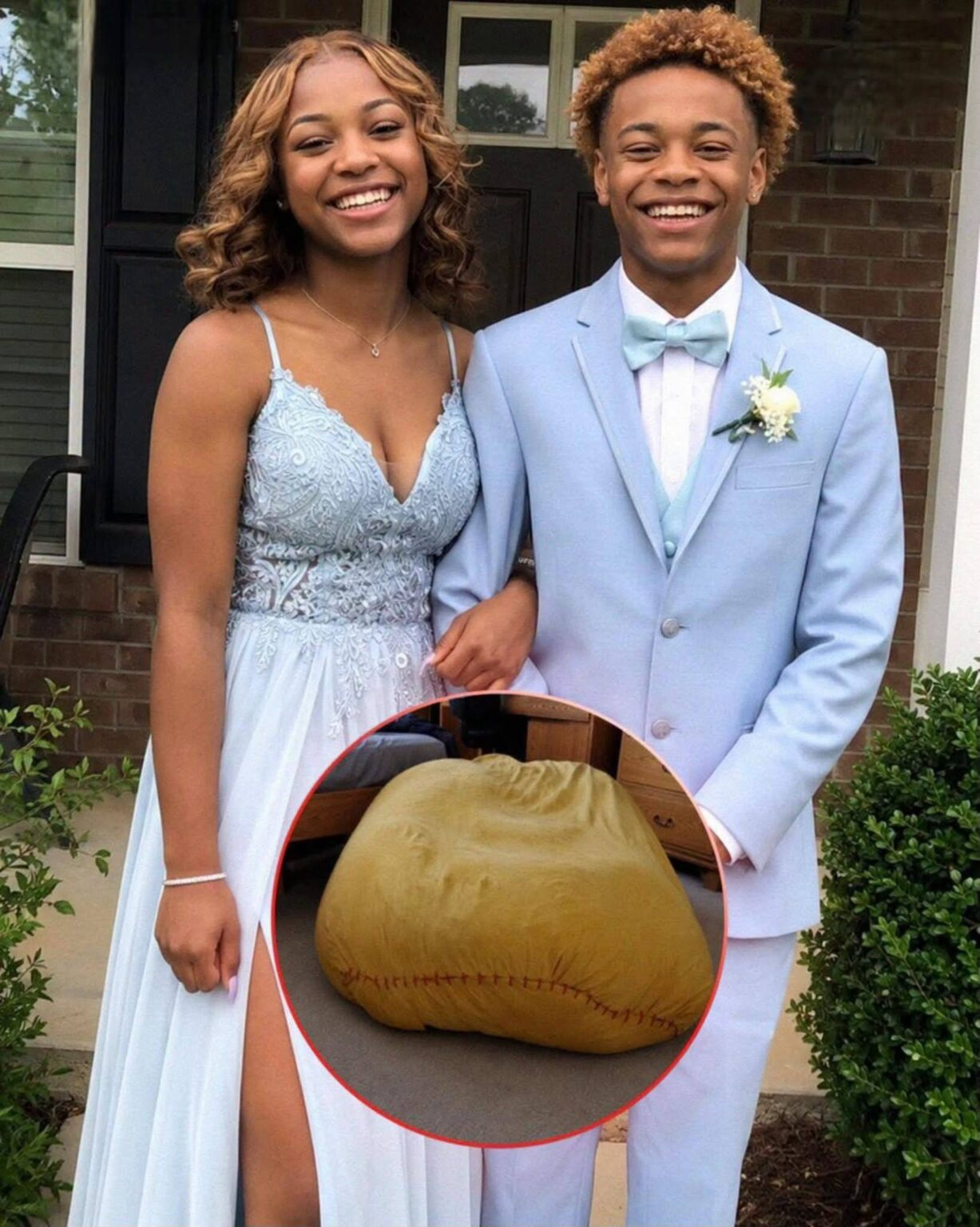
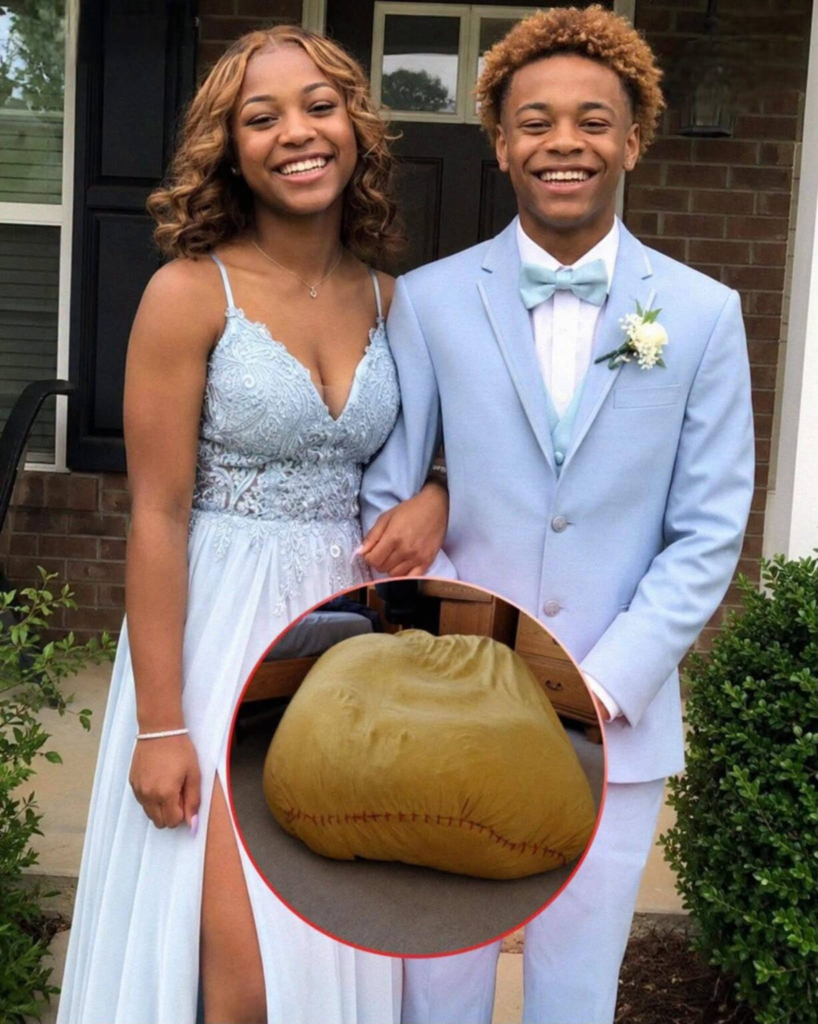
The last time I saw Livia, she was standing on our porch in a pale blue satin dress, her hand linked through Liam’s arm, wearing an impatient, radiant smile. “Stay together,” I had instructed, my voice tight with a control I disguised as maternal concern. I had forbidden her from even speaking to Mitchell, a boy I had deemed “unsuitable” based solely on the social standing of his mother, Natalie. Livia had looked at me with a mixture of pity and exhaustion. “Can I have one night where you trust me, Mom?” she had asked. Those were the last words she ever spoke to me.
Eleven months of agony followed. The police eventually closed the case, declaring that Livia, as an adult, had chosen to leave and was under no obligation to reveal her location. I refused to accept it. I spent nearly a year berating Natalie in parking lots, accusing her family of poisoning my daughter against me, while my son, Liam, retreated into a shell of silence. He stopped laughing, locked his bedroom door, and slowly began to fade away, his grief mirroring my own. I thought he was mourning his twin; I didn’t realize he was mourning the life I had made impossible for her to live.
The discovery happened by accident. Liam had left for college, and while I was cleaning his room, a scorched power strip caused a brief scare. In the chaos of pulling wires from the wall, I collapsed onto his old yellow beanbag chair. The fabric felt wrong—soft in one spot, hard and lumpy in another. A long, uneven seam had been stitched with bright red thread. My hands shook as I ripped it open.
Inside, I didn’t find drugs or illicit journals. I found Livia’s prom dress, folded neatly, alongside dozens of letters addressed to Liam. There was a courthouse marriage certificate, a sonogram, a hospital bracelet, and a photo of a baby girl named Rose. My breath left my lungs in a sharp, painful hiss. She hadn’t been kidnapped. She had escaped.
As I tore through the letters, the reality of my failure crystallized. “Mom: only if she can listen,” one envelope read. I opened a letter addressed to Liam: “I changed in the car after prom. I chose this. I left because Mom loves me like a locked door.” In another, she recounted the night she had arrived at Natalie’s porch, weeping, only to be welcomed with a warmth I had denied her. She had been pregnant, terrified, and reached out to me once, but hung up when she remembered my cruel dismissal of another girl’s pregnancy years prior.
When John, my husband, came home, he found me surrounded by the ghosts of a childhood I had stifled. We confronted Liam via phone, and the truth spilled out—harsh, jagged, and absolute. “You kept digging the grave because it was easier than asking why she left,” Liam told me. He had been the guardian of her secret, the only one who had loved her enough to let her go.
The reconciliation was the hardest thing I have ever done. I had to face Natalie, the woman I had spent months vilifying, who had taken in my daughter when I had made my own home a courtroom. When I finally stood in the hallway of Livia’s new life, seeing her thinner and older, holding a baby wrapped in yellow, I didn’t reach out to grab her. I knew the rules had changed. She was no longer a child I could mold; she was a woman I had to earn.
“Please don’t yell,” she whispered when I took a step forward.
Those three words shattered me more than any accusation could have. I realized then that my “guidance” had been nothing more than a series of tests, and I had failed every single one. I looked at Mitchell, the boy I had painted as a villain, and saw only a husband who had respected Livia’s autonomy in a way I never had.
“I was wrong,” I told them, my voice barely audible in the quiet house. “I made you believe you had to disappear to be loved safely.”
Livia gave me a chance, but it came with conditions. She insisted that Mitchell remain her husband, that Natalie remain a grandmother, and that I stop playing the victim in a story I had authored. It has been months since then. Dinner at my house is no longer a performance of perfection; it is a clumsy, genuine attempt at connection. I still have to stop myself from correcting her tone or judging her choices, but I am learning.
I had spent eleven months searching for a daughter who was hiding, not from the world, but from me. I had to lose her to realize that the person I was trying to protect her from was the reflection in my own mirror. Rose is a toddler now, with Livia’s eyes and a laugh that fills the house—a sound I almost threw away forever. We are a family built on the ruins of my own arrogance, held together by the quiet, resilient grace of children who were strong enough to survive the mother they were given.